Wisdom from Trading Legends: Timeless Lessons from Market Masters
Learn from the greatest traders in history. Curated wisdom from Jesse Livermore, Warren Buffett, George Soros, and other market legends with context and application.
Profabighi Capital Research Team
January 22, 2026
Important Notice
This content is provided for informational and educational purposes only. It should not be considered as financial, investment, or trading advice.
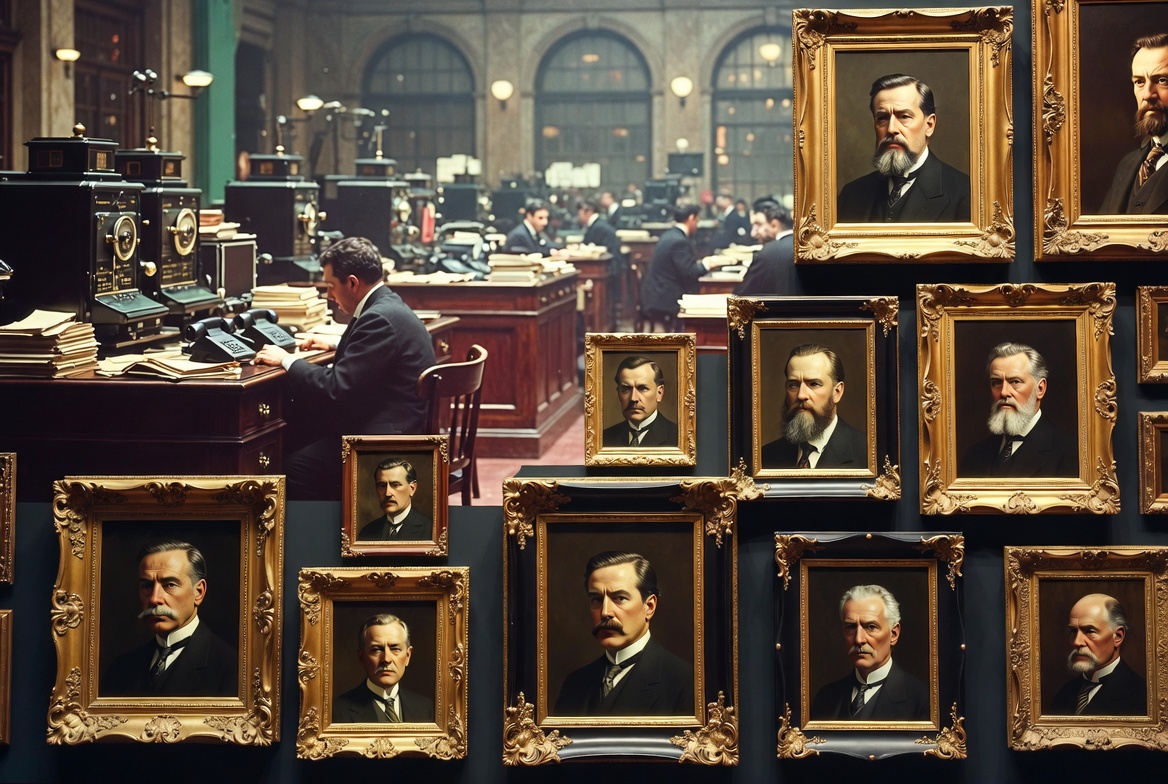
The greatest traders in history have left a roadmap. Not of specific strategies—those change with markets. But of principles—those remain constant across generations.
This guide curates wisdom from trading legends, providing not just their quotes but the context behind them. These aren't motivational posters. They're hard-won lessons from people who made and lost fortunes in the markets.
The Speculators (1900s-1940s)
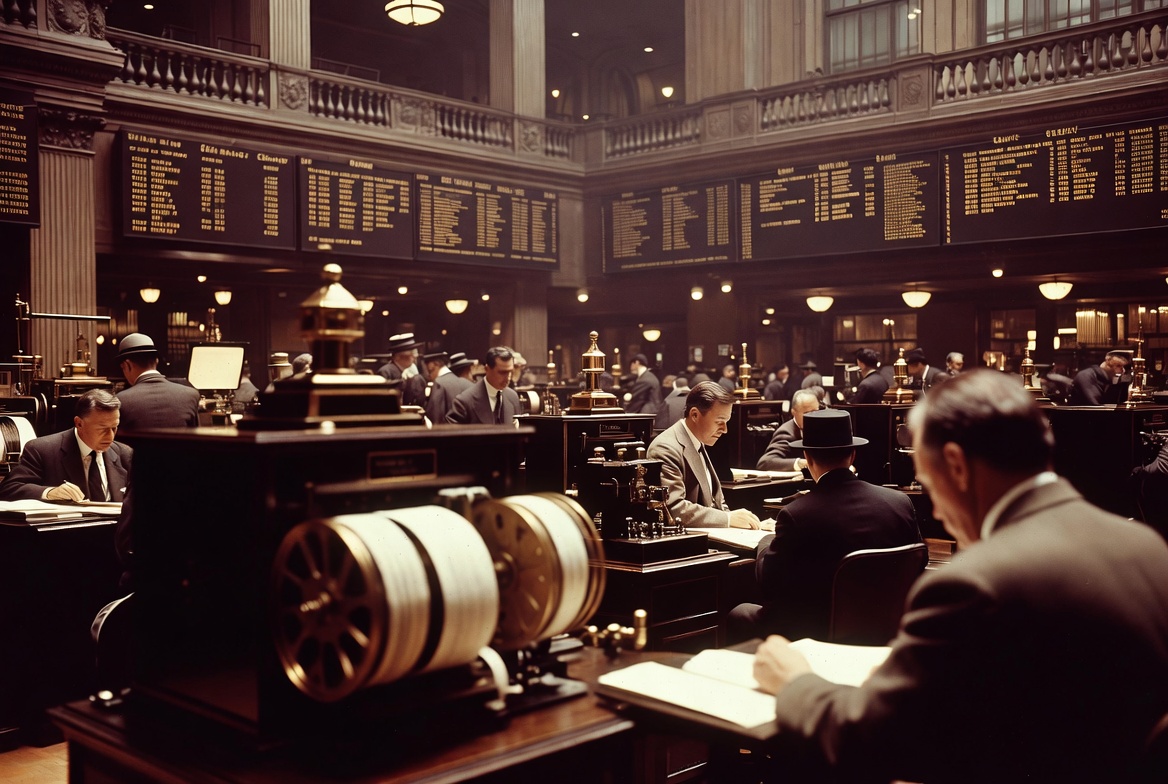
Jesse Livermore
Livermore is perhaps the most famous speculator in history. He made and lost several fortunes, at one point worth over $100 million in 1929 dollars. His story, told in "Reminiscences of a Stock Operator," remains essential reading for traders.
On Patience:
"It never was my thinking that made the big money for me. It always was my sitting."
Context: Livermore's biggest profits came not from clever entries, but from holding positions through major moves. He learned that the hardest part of trading isn't finding opportunities—it's having the patience to let them develop.
Application: Before exiting a winning trade early, ask whether you're acting on analysis or impatience.
On Human Nature:
"There is nothing new in Wall Street. There can't be because speculation is as old as the hills."
Context: Markets change. Technology changes. Human psychology doesn't. The same fear and greed that drove markets in 1900 drive them today.
Application: Study market history. The patterns of human behavior repeat because human nature doesn't change.
On Being Wrong:
"The market is never wrong – opinions often are."
Context: Livermore learned this lesson the hard way, multiple times. When the market disagrees with your analysis, the market isn't wrong.
Application: When a trade goes against you, question your analysis before questioning the market.
Bernard Baruch
Baruch was a financier who advised multiple U.S. presidents and famously sold his stocks before the 1929 crash.
On Market Psychology:
"The main purpose of the stock market is to make fools of as many men as possible."
Context: Baruch understood that markets are designed to exploit human psychology. The crowd is usually wrong at extremes.
Application: When a trade feels obvious and comfortable, be suspicious. The best opportunities often feel uncomfortable.
The Value Investors
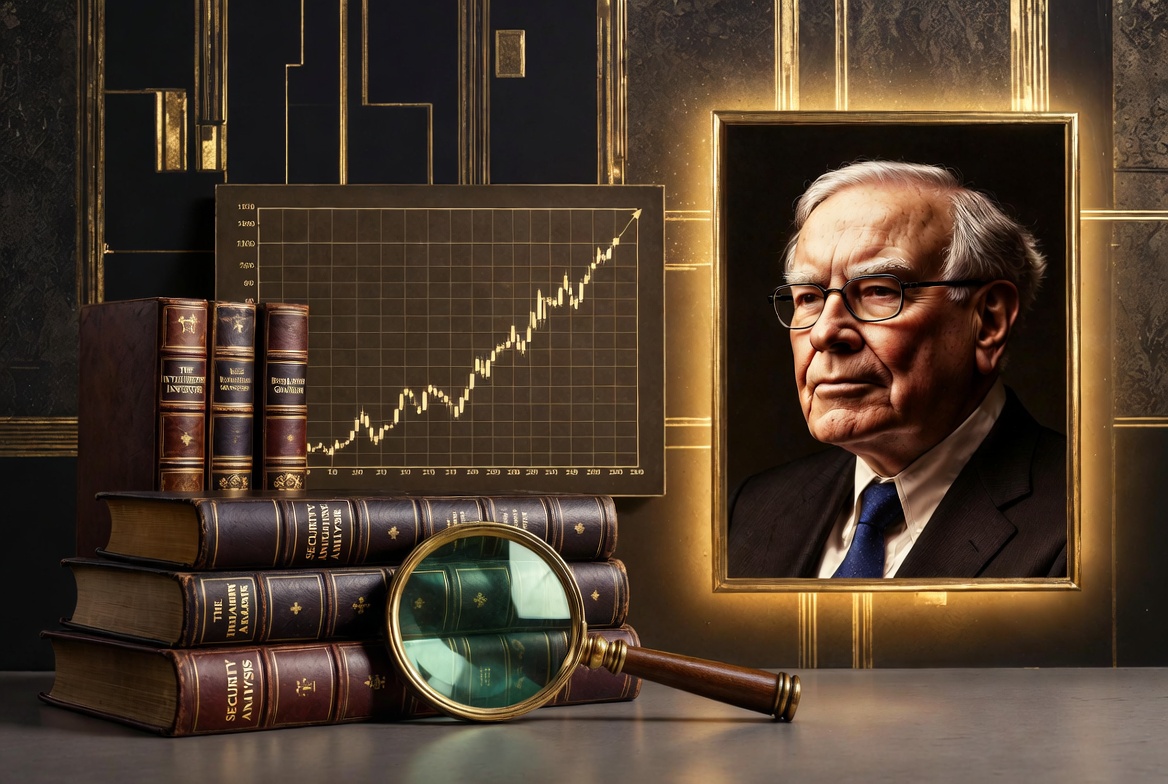
Warren Buffett
The most successful investor in history, with a track record spanning over 60 years.
On Contrarian Thinking:
"Be fearful when others are greedy and greedy when others are fearful."
Context: Everyone knows this quote. Few follow it. When markets are euphoric, Buffett gets cautious. When markets are panicking, he starts buying.
Application: Track market sentiment. When everyone agrees on direction, consider the opposite.
On Patience:
"The stock market is a device for transferring money from the impatient to the patient."
Context: Buffett's entire strategy is built on patience. He waits for the right opportunity, then acts decisively. Most of his time is spent waiting.
Application: Measure your patience. Track how often you trade out of boredom versus conviction.
On Risk:
"Risk comes from not knowing what you're doing."
Context: Buffett doesn't see volatility as risk. He sees ignorance as risk. If you understand what you own and why, price fluctuations are opportunities, not threats.
Application: Before any trade, articulate exactly why you're taking it. If you can't explain it clearly, you don't understand it.
Benjamin Graham
The father of value investing and Buffett's mentor.
On Self-Sabotage:
"The investor's chief problem — and even his worst enemy — is likely to be himself."
Context: Written in 1949, this remains the most accurate description of trading psychology. Your biggest obstacle isn't the market—it's your own emotions and biases.
Application: Keep a journal of your emotional states during trading. Your patterns will reveal themselves.
On Market Behavior:
"In the short run, the market is a voting machine but in the long run, it is a weighing machine."
Context: Short-term prices reflect sentiment and speculation. Long-term prices reflect fundamental value.
Application: Match your timeframe to your analysis. Don't use long-term analysis for short-term trades.
The Macro Traders

George Soros
Famous for "breaking the Bank of England" in 1992, making over $1 billion in a single day.
On Asymmetric Risk:
"It's not whether you're right or wrong that's important, but how much money you make when you're right and how much you lose when you're wrong."
Context: This is perhaps the most important concept in trading. Being right 60% of the time means nothing if your losers are three times your winners.
Application: Calculate your average winner versus average loser. Focus on improving the ratio, not just win rate.
On Uncertainty:
"Markets are constantly in a state of uncertainty and flux, and money is made by discounting the obvious and betting on the unexpected."
Context: If something is obvious, it's already priced in. Profits come from seeing what others don't see.
Application: When your analysis matches consensus, question whether there's actually an edge.
Paul Tudor Jones
One of the most successful hedge fund managers in history, famous for predicting the 1987 crash.
On Capital Preservation:
"Don't focus on making money; focus on protecting what you have."
Context: PTJ's primary goal isn't profit—it's survival. He knows that if he protects his capital, the profits will come.
Application: Before asking "how much can I make?" ask "how much can I lose?"
On Continuous Learning:
"The secret to being successful from a trading perspective is to have an indefatigable and an undying and unquenchable thirst for information and knowledge."
Context: PTJ never stops learning. Markets evolve, and traders must evolve with them.
Application: Dedicate time weekly to learning something new about markets, psychology, or your own trading.
Ray Dalio
Built Bridgewater Associates into the world's largest hedge fund.
On Learning from Mistakes:
"Pain + Reflection = Progress"
Context: Dalio systematized learning from failure. Every mistake is data. Every loss is a lesson—but only if you reflect on it honestly.
Application: After every losing trade, write down what you learned. Make reflection systematic.
On Prediction:
"He who lives by the crystal ball will eat shattered glass."
Context: Dalio doesn't try to predict the future. He builds systems that work across multiple scenarios.
Application: Instead of predicting what will happen, prepare for multiple scenarios.
The Technical Traders
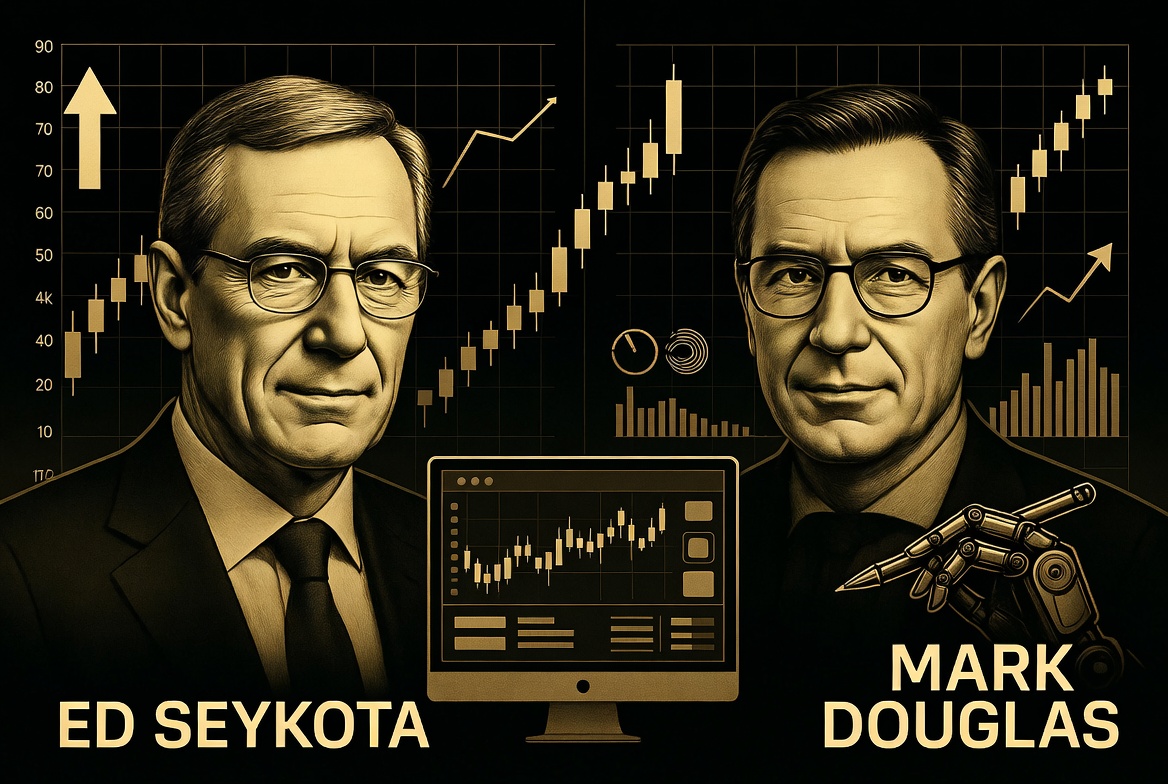
Ed Seykota
A pioneer of computerized trading and one of the original "Market Wizards."
On Cutting Losses:
"The elements of good trading are: (1) cutting losses, (2) cutting losses, and (3) cutting losses."
Context: Seykota said it three times for a reason. Every blown account comes from not cutting losses.
Application: Review your losing trades. How many would have been smaller if you'd cut them sooner?
On Psychology:
"Win or lose, everybody gets what they want out of the market."
Context: This provocative statement suggests that traders who consistently lose are getting something from losing—perhaps excitement, self-punishment, or an excuse.
Application: Honestly examine what you're getting from your trading behavior, especially the destructive patterns.
Mark Douglas
Author of "Trading in the Zone," one of the most influential books on trading psychology.
On Probability:
"Trading is a probability game. You don't have to know what's going to happen next to make money."
Context: This freed countless traders from the need to predict. You don't need to know what will happen. You need an edge and the discipline to execute it consistently.
Application: Stop trying to be right about direction. Focus on having an edge and executing it.
On Acceptance:
"The best traders have evolved to the point where they believe, without a shred of doubt or internal conflict, that anything can happen."
Context: Accepting uncertainty is the foundation of trading psychology. When you truly accept that any trade can lose, you stop fighting the market.
Application: Before every trade, genuinely accept that it might lose. If you can't accept that, don't take the trade.
Common Themes
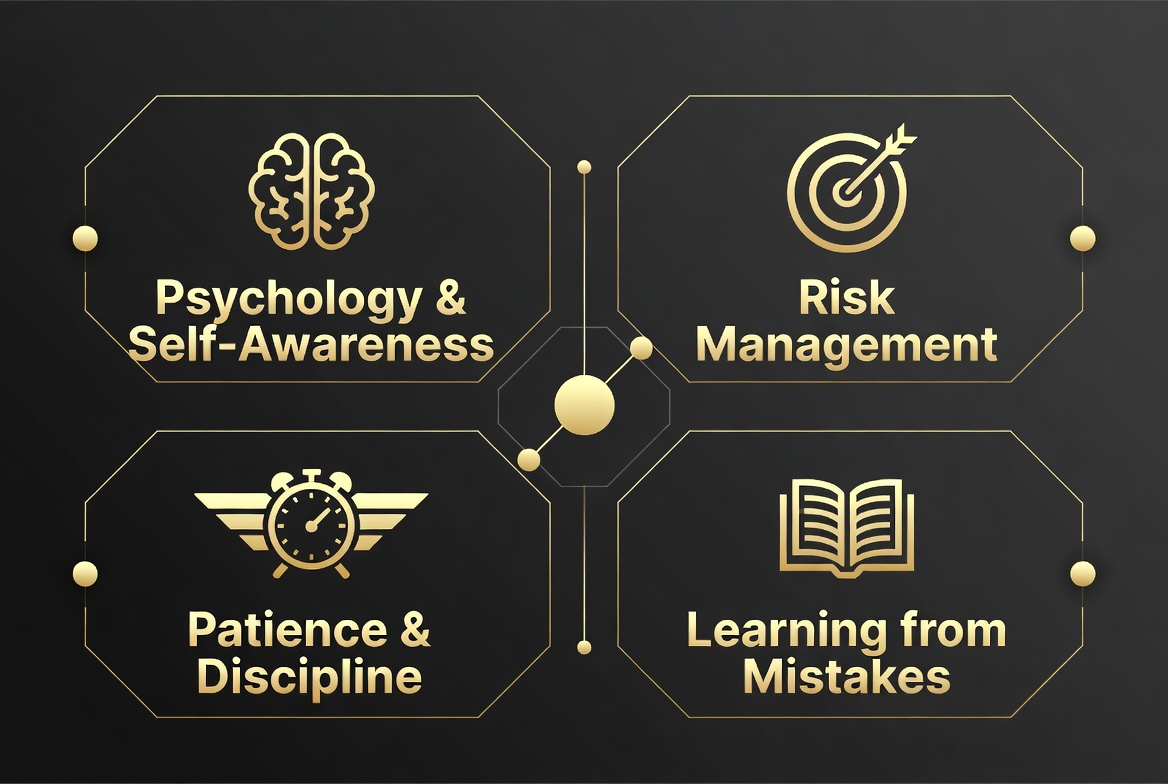
Notice what these legends consistently emphasize:
Psychology and Self-Awareness: Nearly every legend points to the trader's own mind as the primary challenge.
Risk Management and Capital Preservation: Protecting capital appears more frequently than making money.
Patience and Discipline: Waiting for the right opportunity, then executing without hesitation.
Learning from Mistakes: Systematic reflection on failures as the path to improvement.
Notice what they rarely discuss:
- Specific indicators
- Entry techniques
- Chart patterns
- Hot tips
The technical aspects of trading are the easy part. The mental game is where fortunes are made and lost.
Key Takeaways

Human psychology doesn't change. Wisdom from a century ago remains applicable because fear and greed are constant.
Risk management is paramount. Capital preservation appears in nearly every legend's wisdom.
Patience is the edge. The money comes from waiting, not trading.
You are your biggest obstacle. Self-awareness and emotional control matter more than analysis.
Learn from pain. Every loss is a lesson, but only if you reflect on it.
Accept uncertainty. You don't need to predict—you need an edge and discipline.
The mental game determines success. Technical skills are necessary but not sufficient.
Frequently Asked Questions
Which trading legend should you study first?
Start with Jesse Livermore's story in "Reminiscences of a Stock Operator." It's engaging, timeless, and covers psychological aspects better than any textbook. Then move to "Market Wizards" by Jack Schwager for diverse perspectives.
Are these old quotes still relevant today?
Absolutely. Markets change, technology changes, but human psychology doesn't. The same fear and greed that drove markets in 1900 drive them today. That's why century-old wisdom remains applicable.
What's the most important lesson from these legends?
Risk management and capital preservation appear in almost every legend's wisdom. Protecting what you have is more important than making more. Survival is the prerequisite for success.
Did these traders ever fail?
Yes, dramatically. Jesse Livermore went bankrupt multiple times. Many Market Wizards had significant drawdowns. The difference is they learned from failures and survived to trade another day.
How do you apply this wisdom practically?
Start with one principle that resonates. For example, if Seykota's "cutting losses" speaks to you, focus entirely on improving your loss-cutting for a month. Don't try to implement everything at once.
Are there any modern trading legends?
Yes, though they're often less public. The "New Market Wizards" and "Hedge Fund Market Wizards" books profile more recent traders. The principles remain remarkably consistent across generations.
Recommended Reading
- "Reminiscences of a Stock Operator" by Edwin Lefèvre
- "Market Wizards" by Jack Schwager
- "Trading in the Zone" by Mark Douglas
- "The Intelligent Investor" by Benjamin Graham
- "Principles" by Ray Dalio
Conclusion
The greatest traders in history have left a roadmap. Not of specific strategies—those change with markets. But of principles—those remain constant.
Patience. Risk management. Self-awareness. Cutting losses. Accepting uncertainty.
These aren't exciting. They don't promise quick riches. But they're what separates traders who survive from traders who blow up.
"There is nothing new in Wall Street. There can't be because speculation is as old as the hills." — Jesse Livermore
The wisdom is there. It's been there for a century. The question is whether you'll apply it.
Related Articles:
- The Stoic Trader Framework: Ancient Wisdom for Modern Markets
- The Patience Principle: Why Trading Less Makes You More
- Risk Psychology: Why You Break Your Own Rules
- Trading Journal Mastery: Your Path to Consistent Profits
- Mental Health for Traders: Building a Sustainable Trading Career